
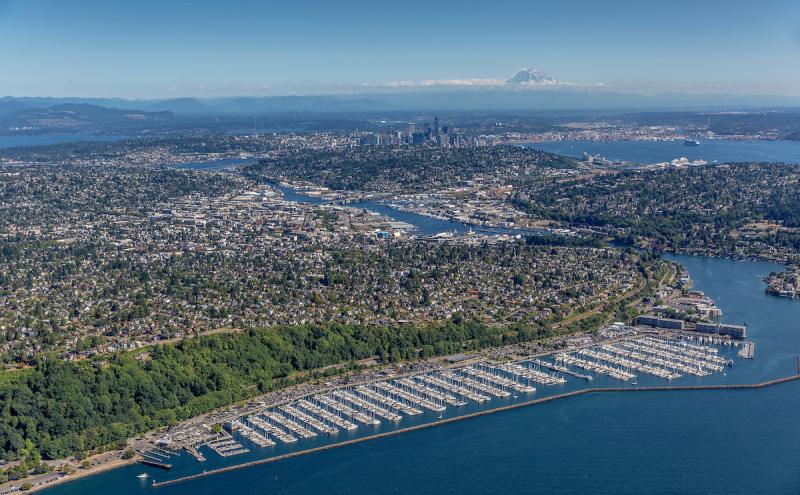
The Port of Seattle’s role in emergencies occurring on the Port’s waterfront/Maritime properties is unique. The Port supports emergency responses on its property as part of a Unified Command but is not the Authority Having Jurisdiction (AHJ) over the response except for police incidents.
Authorities Having Jurisdiction
The following are the Authorities Having Jurisdiction (AHJ) for Port of Seattle waterfront/Maritime property.
- Police: the Port of Seattle Police Department is the AHJ for Port property but maintains a mutual aid agreement with the Seattle Police Department. Either entity may respond to emergencies on Port property in Seattle. Call 9-1-1 and ask to be connected to Port of Seattle dispatch.
- Fire: the Seattle Fire Department is the AHJ and responds to emergencies on Port property in Seattle. Call 9-1-1 and stay connected with the City of Seattle dispatch.
- United States Coast Guard: the United States Coast Guard / Sector Puget Sound is the AHJ and responds to emergencies on Washington’s waterways. Call 1-833-449-0369 or use VHF 13/16.
- BNSF Railway: BNSF Railway is the AHJ and responds to emergencies involving the railroad. Call 1-800-832-5452 for railroad emergencies.
Emergency Management
While the Port supports life safety responses on its property, its mission differs from city and county emergency management. During a large and/or destructive emergency, the Port’s primary objective is business continuity – restoring its facilities and operations in support of the regional response.
Tenants should look to the City of Seattle Emergency Management and King County Office of Emergency Management for public guidance, services, and resources for emergencies and to sign-up to receive emergency alerts. Ready.gov is another helpful resource.
The Port will communicate Port facility- and program-specific information to tenants and partners during emergencies. Mutual aid requests of the Port of Seattle shall be directed to King County, which will make the official request to the Port.
Evacuation
Note: tenants are responsible for identifying evacuation routes and posting evacuation maps for their area/s.
Tips for Creating Evacuation Maps
- You/your employees know your workspace/s best.
- Identify two routes from each workspace to safety.
- When identifying assembly areas, ensure the area is not in harm’s way (e.g., traffic, operations) and that there are no structures overhead.
- Evacuation maps do not have to be professionally designed or printed; a drawing is sufficient.
Tsunami Resources
State of Washington Emergency Management Division / Tsunami Resources
Personal Preparedness Resources
State of Washington Emergency Management Division / Preparedness